07/02/26
The importance of healthy ecosystems for supply chains
By Ariana Carter, ECOM Cocoa Sustainability Lead
Healthy ecosystems are essential to the productivity and long-term viability of agricultural supply chains. Nature supports the processes that keep cocoa landscapes functioning: pollination, soil formation, nutrient cycling, natural pest control, water storage and purification, and micro-climate regulation. Together, these processes help ecosystems absorb and recover from external shocks such as droughts, floods, fires, pests, and disease.

Research consistently shows that intact, biodiverse ecosystems are more resilient to environmental shocks than degraded ones. This dynamic was clearly illustrated in the cocoa sector just a few years ago. In Côte d’Ivoire, natural forest cover is now estimated at only around 10% of total land area, down from roughly 50% in the 1960s. The ecosystem is therefore highly degraded, and when adverse weather conditions hit in 2023–24, productivity dropped by more than 30% across Côte d’Ivoire and Ghana. While several factors contributed to this decline, the fragmented and ecologically depleted cocoa landscape reduced the system’s ability to absorb climatic stress.
For companies like ECOM, the resilience that comes with sustainable ecosystems helps to stabilise yields and support reliable supply over time, reducing operational risk. This resiliency mirrors what we seek to build in our supply chains: systems designed to adapt, withstand pressure over time, and continue to perform in a continually more unpredictable environment.
How do we look beyond carbon?
Today, much of the investment in nature is driven by carbon markets. This has, crucially, helped mobilise funding for ecosystem restoration, but it also risks narrowing the focus to measurable and accountable carbon outcomes only.
While ecosystem services are less standardised and arguably harder to measure and monetise than carbon, they are critical to reducing supply risk. Long-term agricultural productivity depends just as much on soil health, water availability, and biodiversity. Projects like forest protection in lands adjacent to agriculture that strengthen ecosystems more broadly could deliver more durable outcomes. They support healthier landscapes, improve farm productivity, and could result in higher-quality and longer-lasting carbon benefits as well, all while reducing risk to agribusinesses’ long-term supply.
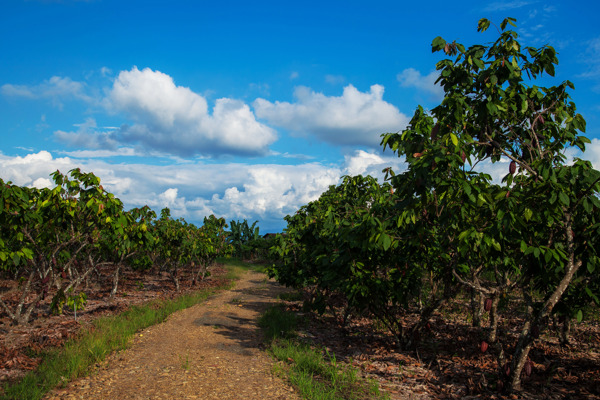
In order to achieve this, organisations can map out their reliance on various ecosystem services to understand where there could be potential risks and therefore costs for the company, helping to channel funding into projects in the same way that is often done for carbon initiatives.
What does this mean for cocoa?
For cocoa farmers, carbon targets are often abstract. What matters day to day is water, shade, soil quality, and managing pests and disease, as these factors tangibly and directly affect their yields and livelihoods. As a result, carbon projects that also deliver these nature-based outcomes are more likely to resonate locally and succeed. When farmers see real, practical improvements on their farms, they are more willing and able to stay engaged over the long-term.
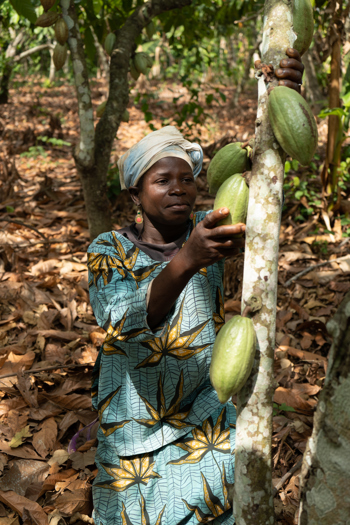
Accordingly, from my perspective at ECOM, farmers should be the primary beneficiaries. Climate and carbon benefits should follow as a result, not the other way around. Encouragingly, the voluntary carbon market is increasingly recognising this, with greater value placed on projects that also deliver biodiversity and wider ecosystem benefits. However, quantifying carbon benefits off-farm continues to be unclear in existing carbon guidance, which is a crucial part of the equation.
Building long-term resilience
Ultimately, resilient supply chains depend on resilient ecosystems. I see investment in healthy ecosystems as essential not only for nature and farming communities, but for the long-term security, quality, and sustainability of agricultural supply.
More news
News
Click to read this articleAdvancing regenerative cotton through regenagri®
With a heritage in cotton dating back to 1849, ECOM is proud to partner with Candiani and Regenagri in advancing regenerative cotton across global supply chains.
News
Click to read this articleJDE Peet’s and ECOM China launch regenerative coffee project
At the start of 2026, our Coffee in Regenerative Agriculture System Project– a five-year collaboration between JDE Peet’s and ECOM China– was officially launched in Yunnan. The initiative aims to strengthen agronomic practices, support livelihoods, and contribute to more transparent and responsible coffee supply chains.
News
Click to read this articleDeforestation-free cocoa landscape in Cross River, Nigeria
Following a sharp increase in cocoa-driven deforestation in Cross River State, Nigeria, Tulip Cocoa and the Wildlife Conservation Society are collaborating on the Deforestation-Free Cocoa Landscape initiative.
News
Click to read this articleC. Dorman recognised at Global Coffee Awards
We are delighted to share that C. Dorman Ltd.– our subsidiary in Kenya– has been recognised at the Global Coffee Awards, in partnership with Mwendi Wega Coffee Estate and Café Imports.
News
Click to read this articleSupporting fire response capacity in Ikom, Nigeria
Tulip Cocoa Processing (TCP), part of ECOM Cocoa, has donated a firefighting truck to support the Nigerian Fire Service in Cross River State, helping strengthen emergency response capacity in Ikom and surrounding communities.
News
Click to read this articleECOM offices celebrate International Women's Day
Our teams around the world celebrated International Women’s Day in various ways this month. The day provided an opportunity to recognise the contributions of women across our company and throughout the agricultural communities we work with.
News
Click to read this articleECOM and CelsiusPro partner to support Indonesian coffee farmers with parametric insurance
Learn about ECOM's partnership with CelsiusPro to develop parametric insurance solutions, designed to help coffee farmers in Indonesia manage increasing climate risks.
News
Click to read this articleStrengthening food security in Kenya’s coffee sector
Two ECOM-supported farmer groups in Kenya have now achieved Food Security Standards (FSS) certification – the first of its kind in the country. This milestone reflects the importance we place on food security as a foundation for sustainable coffee production and ensuring the long-term resiliency of Kenya’s coffee sector.
News
Click to read this articleBeyond coffee: ECOM stands with communities in Aceh and Sumatra
In November 2025, severe floods and landslides affected parts of Aceh and Northern Sumatra, Indonesia, impacting several of the coffee-growing communities in which we work. In response, we activated our Common Grounds partnership with JDE Peet’s, delivering urgent support to the most affected areas.