06/04/26
Deforestation-free cocoa landscape in Cross River, Nigeria
Cross River State in Nigeria has some of the country’s most suitable land for cocoa cultivation. As global demand for cocoa has surged, driving up prices and reshaping international sourcing, pressure to expand production in the region has intensified. This expansion, however, has come at a steep environmental cost. Cocoa-driven land conversion is now a major contributor to deforestation and carbon emissions in the Cross River landscape.
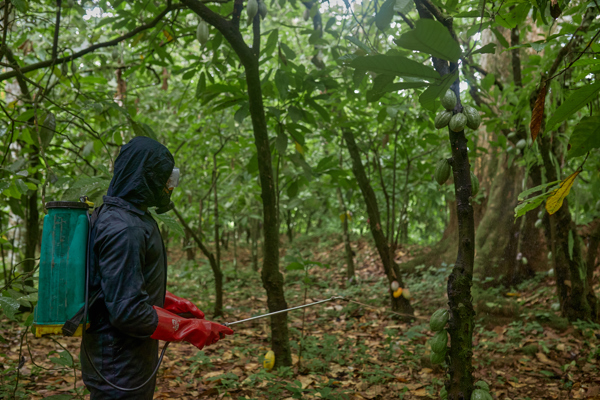
Over the past decade, the region has lost an estimated 12,000 hectares of forest each year, nearly 1% of its forest cover annually. While this deforestation is driven by multiple factors, cocoa expansion remains an important contributor. Even more concerning, the pace of forest loss has accelerated over the last five years and is likely to continue as global cocoa demand continues to rise.
In response to these challenges, Tulip (ECOM’s entity in Nigeria) and the Wildlife Conservation Society (WCS) are partnering on the Deforestation-Free Cocoa Landscape initiative, launched in July 2025. The WCS-led initiative aims to halt cocoa-driven deforestation while improving farmer livelihoods and protecting globally significant biodiversity.
Cocoa expansion and climate impact
Projections indicate that cocoa expansion in the region is increasingly linked to deforestation risks. Implementing targeted interventions to prevent cocoa cultivation from encroaching into protected areas and the surrounding 20-kilometre buffer zone is therefore critical to prevent further forest loss, maintain carbon stocks, and support climate resilience.
Encroachment into protected areas also remains a persistent threat. Addressing this risk is essential not only for reducing emissions but also for safeguarding critical ecosystems and wildlife habitats.
Ecosystem health and livelihoods
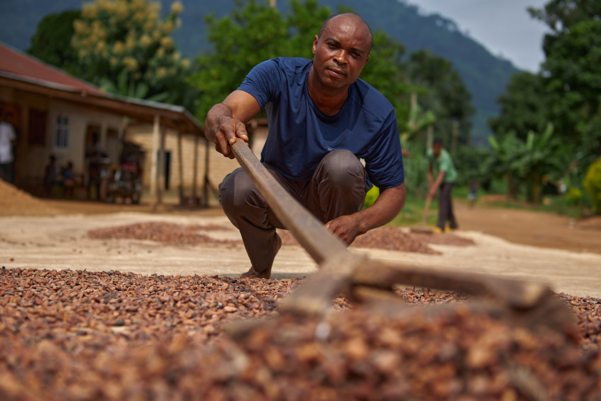
Cross River is Nigeria’s second-largest cocoa-producing state and supports the livelihoods of an estimated 75,000 to 100,000 farmers. In this region, cocoa productivity has the potential to increase with better agricultural training to address ageing and diseased farms, better input access and increased climate change resilience. Only about 20% of farmers currently receive technical extension support, mainly through company sustainability programs and Licensed Buying Associations.
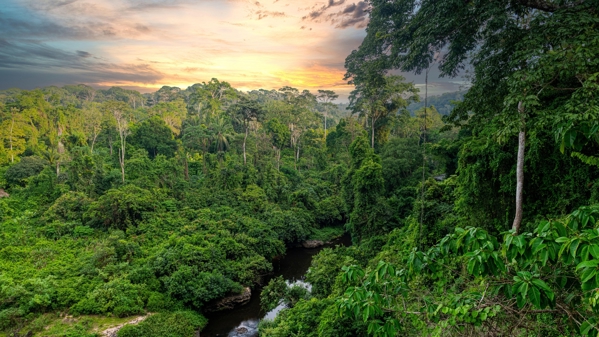
The Cross River landscape is also home to extraordinary biodiversity, including over 1,000 different species of butterflies, numerous threatened bird and amphibian species, leopards, African elephants, and 11 species of primates, such as chimpanzees, drills, and Preuss’ monkeys. It is also internationally recognised as the last stronghold of the Critically Endangered Cross River gorilla, with an estimated 250 to 300 individuals remaining in just three to four troops.
The Role of the Wildlife Conservation Society (WCS)
WCS is one of the world’s largest and longest-running conservation organisations, working to protect wildlife and ecosystems through scientific research, field-based conservation, and community engagement. WCS emphasises the close links between biodiversity, livelihoods, and climate resilience, and advances policies and practices that support long-term environmental sustainability. In Cross River State, they play a central role in the management of four protected areas that serve as critical biodiversity strongholds and together form a vital ecological corridor linking Nigeria and Cameroon.
Proposed Interventions for a Deforestation-Free Cocoa Landscape
The initiative focuses on an integrated set of interventions designed to protect forests, reduce emissions, and improve farmer livelihoods:
-
• Forest protection, monitoring, and reforestation
-
• Landscape coordination and policy engagement
-
• Climate-smart cocoa production
-
• Improved cocoa productivity and market access
-
• Cocoa agroforestry development and diversified livelihoods
-
• Improved traceability and support for Licensed Buying Associations
-
• Community engagement, social inclusion, and community forest management
More news
News
Click to read this articleAdvancing regenerative cotton through regenagri®
With a heritage in cotton dating back to 1849, ECOM is proud to partner with Candiani and Regenagri in advancing regenerative cotton across global supply chains.
News
Click to read this articleJDE Peet’s and ECOM China launch regenerative coffee project
At the start of 2026, our Coffee in Regenerative Agriculture System Project– a five-year collaboration between JDE Peet’s and ECOM China– was officially launched in Yunnan. The initiative aims to strengthen agronomic practices, support livelihoods, and contribute to more transparent and responsible coffee supply chains.
News
Click to read this articleC. Dorman recognised at Global Coffee Awards
We are delighted to share that C. Dorman Ltd.– our subsidiary in Kenya– has been recognised at the Global Coffee Awards, in partnership with Mwendi Wega Coffee Estate and Café Imports.
News
Click to read this articleSupporting fire response capacity in Ikom, Nigeria
Tulip Cocoa Processing (TCP), part of ECOM Cocoa, has donated a firefighting truck to support the Nigerian Fire Service in Cross River State, helping strengthen emergency response capacity in Ikom and surrounding communities.
News
Click to read this articleECOM offices celebrate International Women's Day
Our teams around the world celebrated International Women’s Day in various ways this month. The day provided an opportunity to recognise the contributions of women across our company and throughout the agricultural communities we work with.
News
Click to read this articleECOM and CelsiusPro partner to support Indonesian coffee farmers with parametric insurance
Learn about ECOM's partnership with CelsiusPro to develop parametric insurance solutions, designed to help coffee farmers in Indonesia manage increasing climate risks.
News
Click to read this articleStrengthening food security in Kenya’s coffee sector
Two ECOM-supported farmer groups in Kenya have now achieved Food Security Standards (FSS) certification – the first of its kind in the country. This milestone reflects the importance we place on food security as a foundation for sustainable coffee production and ensuring the long-term resiliency of Kenya’s coffee sector.
News
Click to read this articleThe importance of healthy ecosystems for supply chains
In this article, our Global Cocoa Sustainability Lead, Ariana Carter, shares why healthy ecosystems are crucial for agricultural supply chains and what this means in practice for cocoa.
News
Click to read this articleBeyond coffee: ECOM stands with communities in Aceh and Sumatra
In November 2025, severe floods and landslides affected parts of Aceh and Northern Sumatra, Indonesia, impacting several of the coffee-growing communities in which we work. In response, we activated our Common Grounds partnership with JDE Peet’s, delivering urgent support to the most affected areas.